
Integrating Social and Emotional Learning into 3-D Science Classrooms | Whitepaper
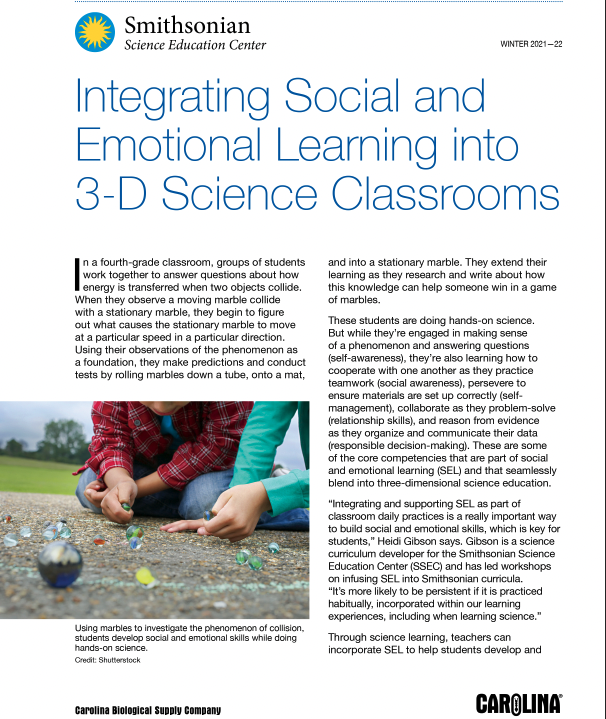
Download PDF In a fourth-grade classroom, groups of students work together to answer questions about how energy is transferred when two objects collide. When they observe a moving marble collide with a stationary marble, they begin to figure out what causes the stationary marble to move at a particular speed in a particular direction. Using […]
Inquiry-Based Science Fosters 21st Century Skills | Infographic
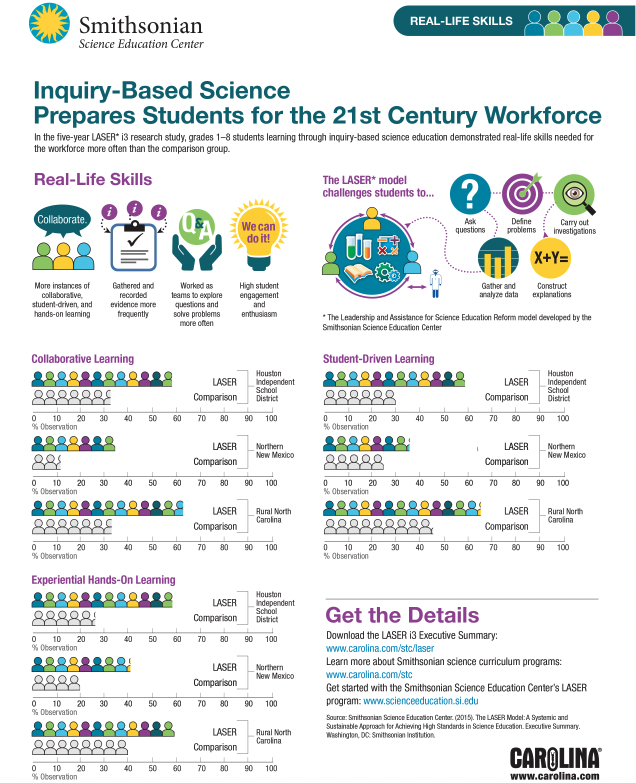
The Smithsonian’s 5-year LASER i3 validation study provided evidence that grades 1–8 students learning through inquiry-based science education demonstrated real-life skills needed for the workforce. Download PDF
Finding Balance in Middle School Science
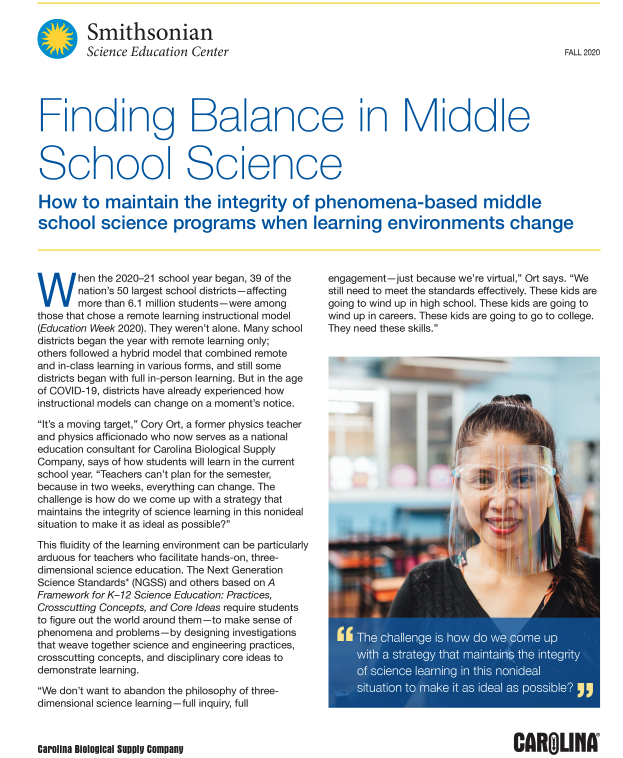
How to maintain the integrity of phenomena-based middle school science programs when learning environments change. Download PDF When the 2020–21 school year began, 39 of the nation’s 50 largest school districts—affecting more than 6.1 million students—were among those that chose a remote learning instructional model (Education Week 2020). They weren’t alone. Many school districts began […]
What Middle School Assessment Should Look Like
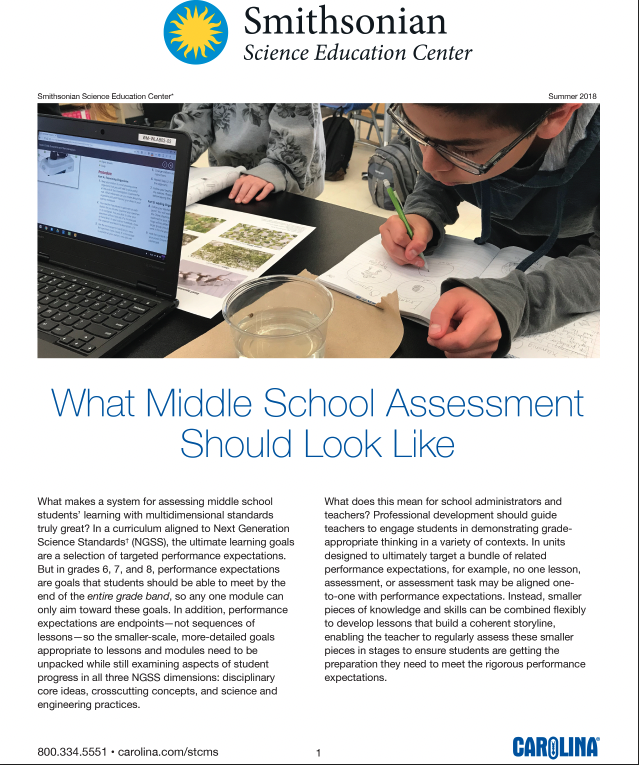
Learn how a great middle school assessment system can positively impact students’ learning of the multidimensional standards of the NGSS. Download PDF What makes a system for assessing middle school students’ learning with multidimensional standards truly great? In a curriculum aligned to Next Generation Science Standards† (NGSS), the ultimate learning goals are a selection of […]
High Touch to High Tech: Computational Thinking in 3-D Science
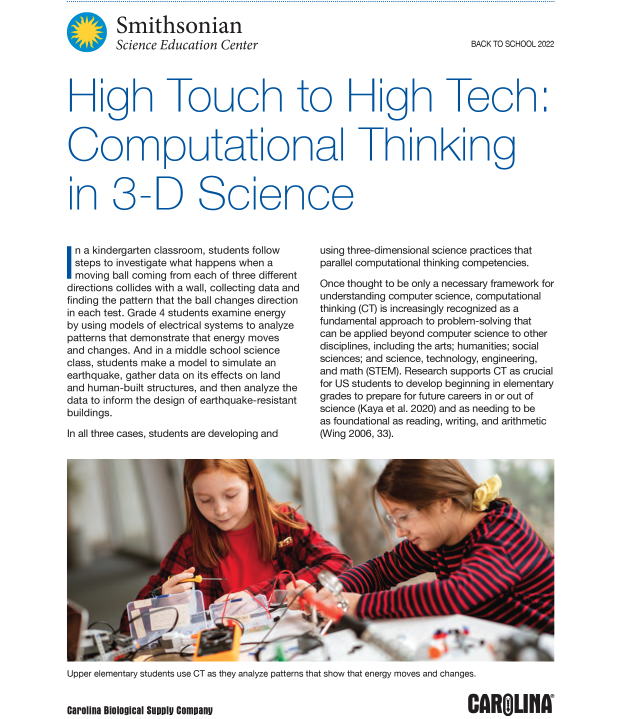
Download PDF In a kindergarten classroom, students follow steps to investigate what happens when a moving ball coming from each of three different directions collides with a wall, collecting data and finding the pattern that the ball changes direction in each test. Grade 4 students examine energy by using models of electrical systems to analyze […]