
Video: Smithsonian Science for the Classroom™ Introduction Video
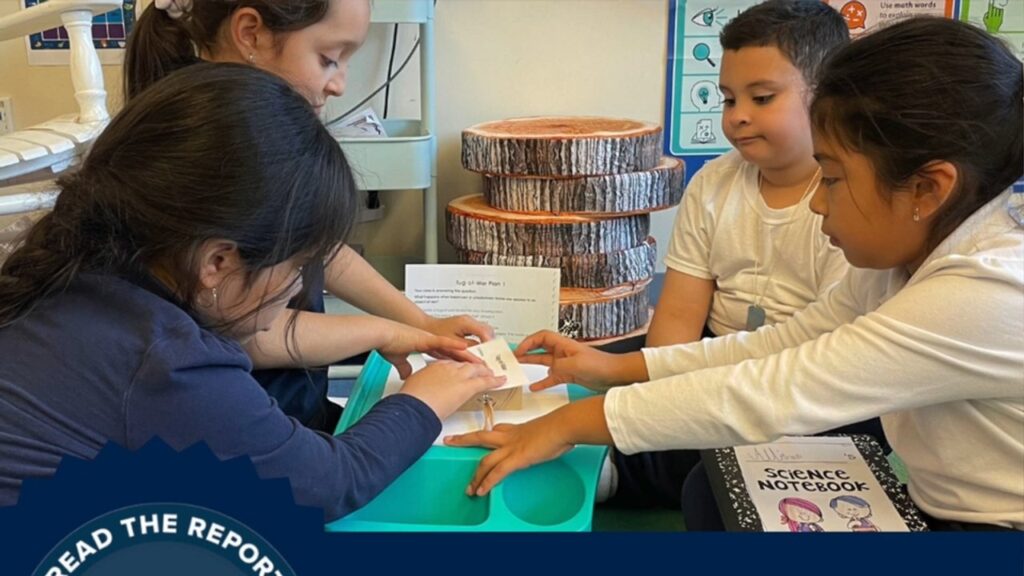
Double the Learning: Science of Reading Strategies in Elementary Science
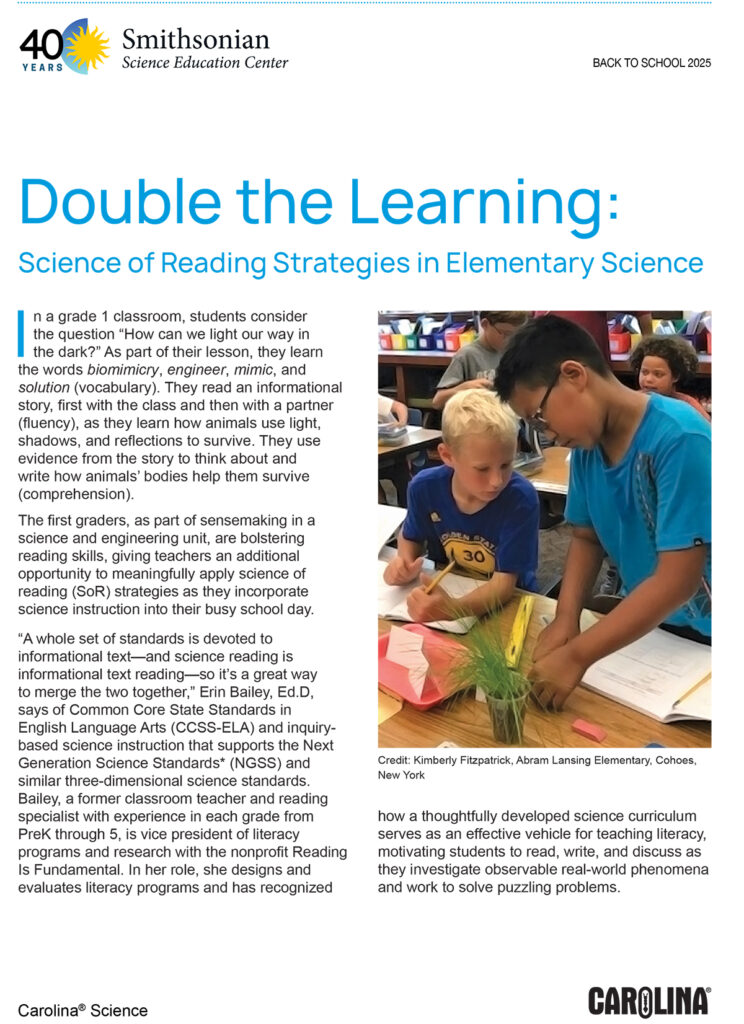
A whole set of standards is devoted to informational text—and science reading is informational text reading—so it’s a great way to merge the two together.
Video: Ed Talk How High-Quality Science Programs Can Improve Reading and Math Scores
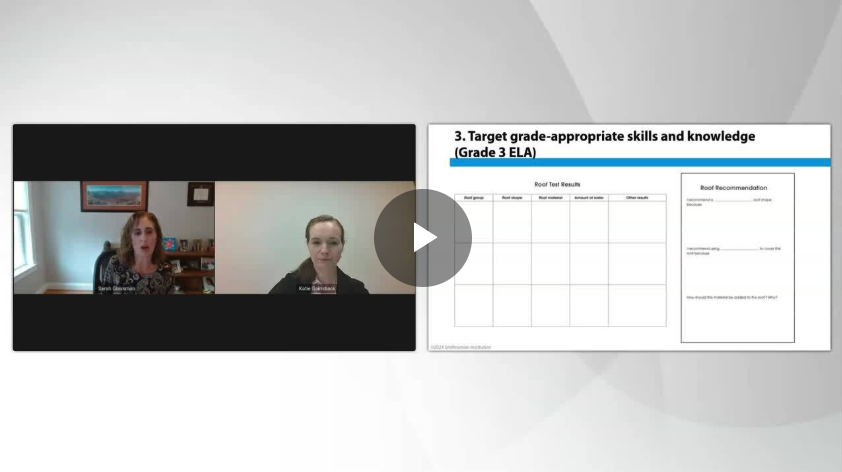
On average, students in grades 3-8 are behind in reading in math. High-quality science programs like Smithsonian Science for the Classroom can improve students’ reading, math, and science scores. Elements of High-Quality Instructional Materials (HQIM) in a science classroom include: • Problem/phenomena-driven student work• Coherent sequence of lessons• Grade-appropriate knowledge/skills being targeted• Inclusive design• External […]
Smithsonian Science for the Classroom™:High-Quality Professional Learning Proven to Increase Student Engagement
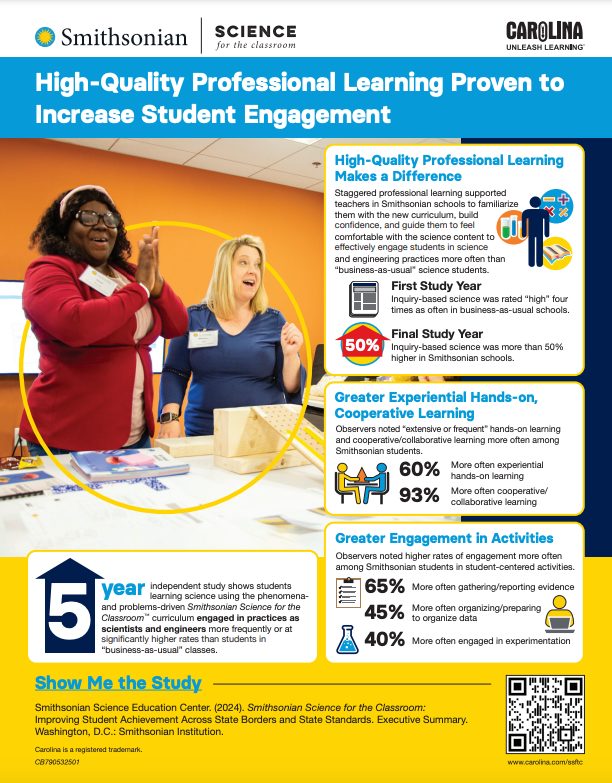
Read more about how high-quality professional learning makes a difference.
Smithsonian Science for the Classroom™: Improving Achievement of High-Needs Students Through Science
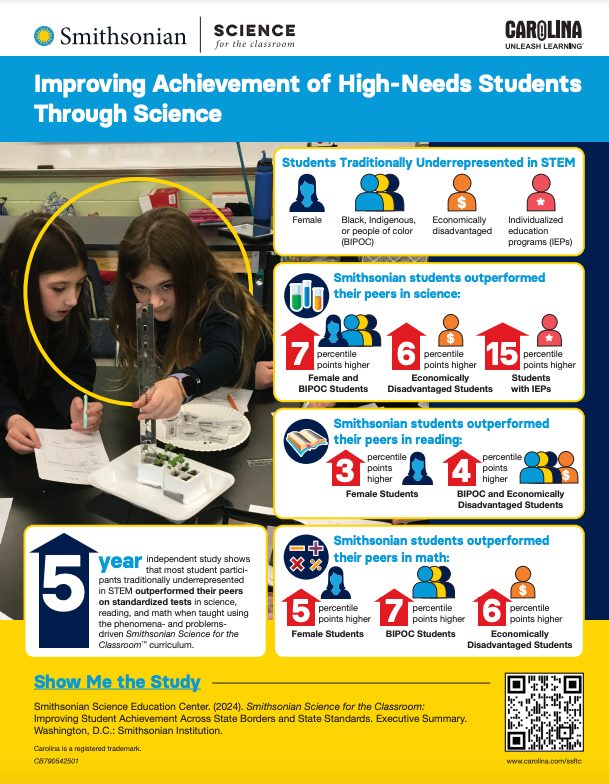
Read more about how Smithsonian students outperformed their peers in science, reading and math.
Smithsonian Science for the Classroom™: Proven to Raise Test Scores in Science, Reading, and Math

Read more about improved student outcomes.
Video: What’s new about Smithsonian Science for the Classroom?
Dr. Brian Mandell, Division Director of Curriculum and Communications, Smithsonian Science Education Center, discusses the key innovations of the new standards Smithsonian’s developers have taken to heart in the development of their new program, Smithsonian Science for the Classroom. Click on the video to learn more.
Video: Teaching Engineering — Research, History, and STEM today
Dr. Carol O’Donnell, Director of the Smithsonian Science Education Center, discusses the importance of Engineering in PreK–12 education. Click on the video to learn more.
Video: Teacher input during the development of Smithsonian Science for the Classroom
Dr. Brian Mandell, Division Director of Curriculum and Communications, Smithsonian Science Education Center, discusses the research and field-test teacher input that influences the development of Smithsonian’s science programs. Click on the video to learn more.
Video: Supporting teachers transition to new standards and helping demystify misconceptions
Dr. Brian Mandell, Division Director of Curriculum and Communications, Smithsonian Science Education Center, discusses how Smithsonian’s science programs instruction supports teachers transitioning into teaching new standards. Click on the video to learn more.