- A collaborative process for planning, analyzing, and constantly improving instructional practices
- A structured process for teachers to work together to discover solutions to common teaching-learning challenges1
- An inquiry cycle that supports teachers to experiment, observe, and improve2

THE LESSON STUDY CYCLE
1. Study
- Form a team of teachers.
- Define a clear lesson focus and goals.
- Conduct in-depth research on the lesson focus, student learning, and the applicable standards and curriculum.
2. Plan
- Write a lesson proposal.
3. Teach
- One of the teachers from the team teaches the lesson to a live audience that includes the rest of the team and other knowledgeable people.
- The other team members and observers note and record the students’ learning and responses to the lesson.
4. Reflect
- The teachers and observers discuss the observations made during the lesson and how the lesson might be adjusted to improve student reception and learning.
- The team communicates its lesson study and findings to others within and potentially outside of its school.
IT’S GO TIME IN NEW YORK STATE


OCM BOCES has been incorporating lesson study into its teacher professional development program since 2016. Its annual “It’s Go Time: Science for All” conference6 demonstrates the power of lesson study to inspire teachers and improve instructional practices and student learning.
THE CONFERENCE EXPERIENCE
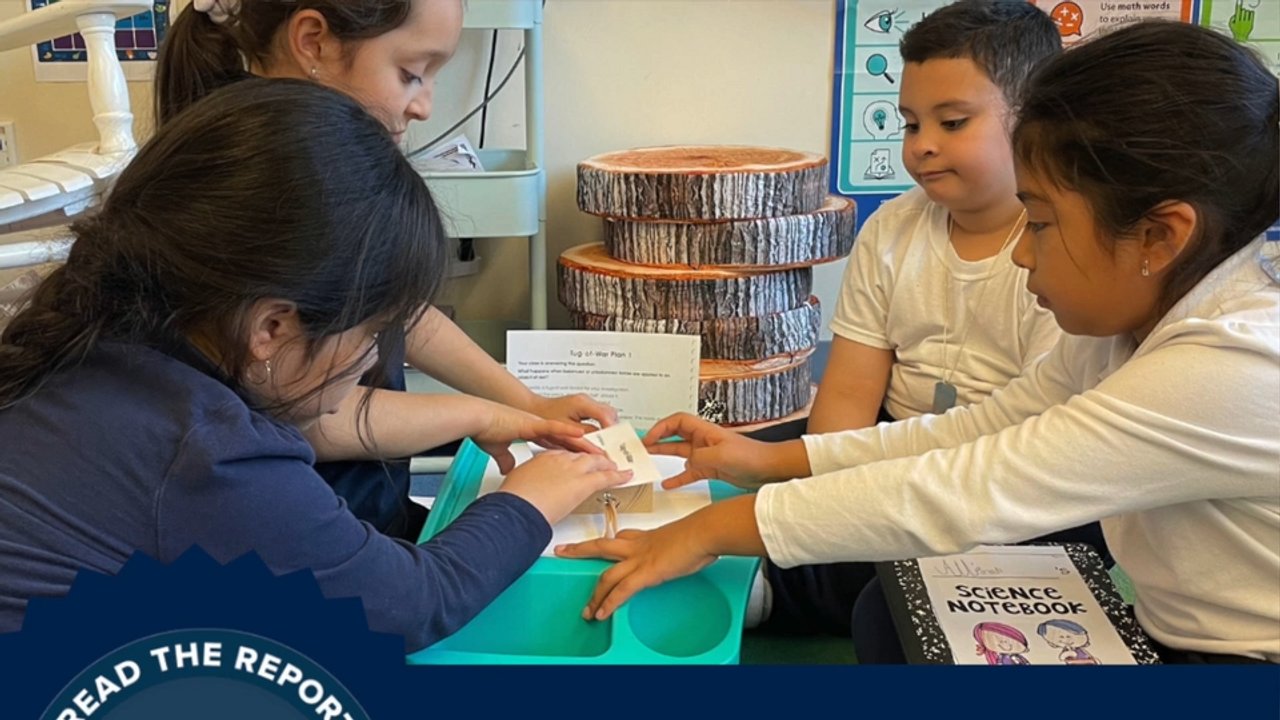
- Grade 2 students designing and testing a solution to slow or prevent erosion
- Grade 4 students matching 3D models of landforms with topographic maps and profiles
- Grade 8 students constructing and testing models to explain energy concepts
The teams teach their lessons to students as conference attendees observe the teaching practices and, more importantly, student responses. The teachers taking part in the lesson and those observing it see firsthand what works for the students, what doesn’t work, and what could be adjusted to make the lesson more successful for students. In essence, they evaluate the lesson through the eyes of the students.

LESSON STUDY AND THE STANDARDS
CHOOSING THE RIGHT CURRICULUM
- The modules and rubrics are clearly broken down into the three dimensions of learning.
- The standards are clear within the modules so teachers learn and become comfortable with them.
- Common student misconceptions are highlighted in the teacher guide to help teachers recognize them and guide students.
- Every module is well-organized around a central question, and lessons within a module follow a trajectory and have a relationship with each other.
- The different modules shed light on each other so they are mutually reinforcing.
- There is a nice progression through the grades, aided by STEM—science, technology, engineering, and math—notebooking that also builds throughout the grade levels.
“Teachers need to understand where the students will begin, where they will end, and what is in-between,” Whisher-Hehl explains, “and Smithsonian Science consistently provides teachers with that information.”
THE SMITHSONIAN PROCESS
- Teachers, standards developers, instructional designers, and other science and education professionals collaborate throughout the development.
- Research is conducted on successful curricula, teacher feedback, and the current literature on science learning and equity learning.
- The draft lesson is revised based on feedback from a Teacher Advisory Board.
- The revised lesson undergoes a broad field test followed by revision based on teacher and student feedback.
- The lesson is published, and feedback is continuously gathered from students and teachers to guide adjustments.
Dr. Brian Mandell, division director of Curriculum and Communication for the Smithsonian Science Education Center, directs development of the Smithsonian Science for the Classroom curriculum. He has learned from the process, as well as from teacher and student feedback, some of the most effective and appreciated aspects of this curriculum.
- The focus on standards that are called out at point-of-use builds teacher confidence in their ability to understand the standards and deliver them to students.
- Standards-aligned formative and summative assessments are used throughout each lesson—not just at the end of the lesson or unit.
- Common student misconceptions are at point-of-use in the teacher’s guide (with citations for further study if desired), which is invaluable for the teacher’s lesson study efforts.
- Teachers and districts appreciate the support they receive during curriculum implementation and as they integrate the standards into their teaching.
These and other intentional aspects of the Smithsonian curriculum make it easy for teachers to use their lesson study insights to better reach and engage their students. Without a comprehensive curriculum such as this, teachers can easily get caught up in trying to build their own modules and lose their lesson study momentum.
ABOUT
Smithsonian Science Education Center
OCM BOCES
Carolina Biological Supply Company
REFERENCES
Email: curriculum@carolina.com
Call: 800.334.5551