By the 1980s and 1990s, curriculum developers such as the Smithsonian Science Education Center were writing science programs with books that were no longer just called “Science”. They were named after the object, such as “Rocks and Minerals,” “Plants” or “Water.”
Hands-on Science in A Digital World
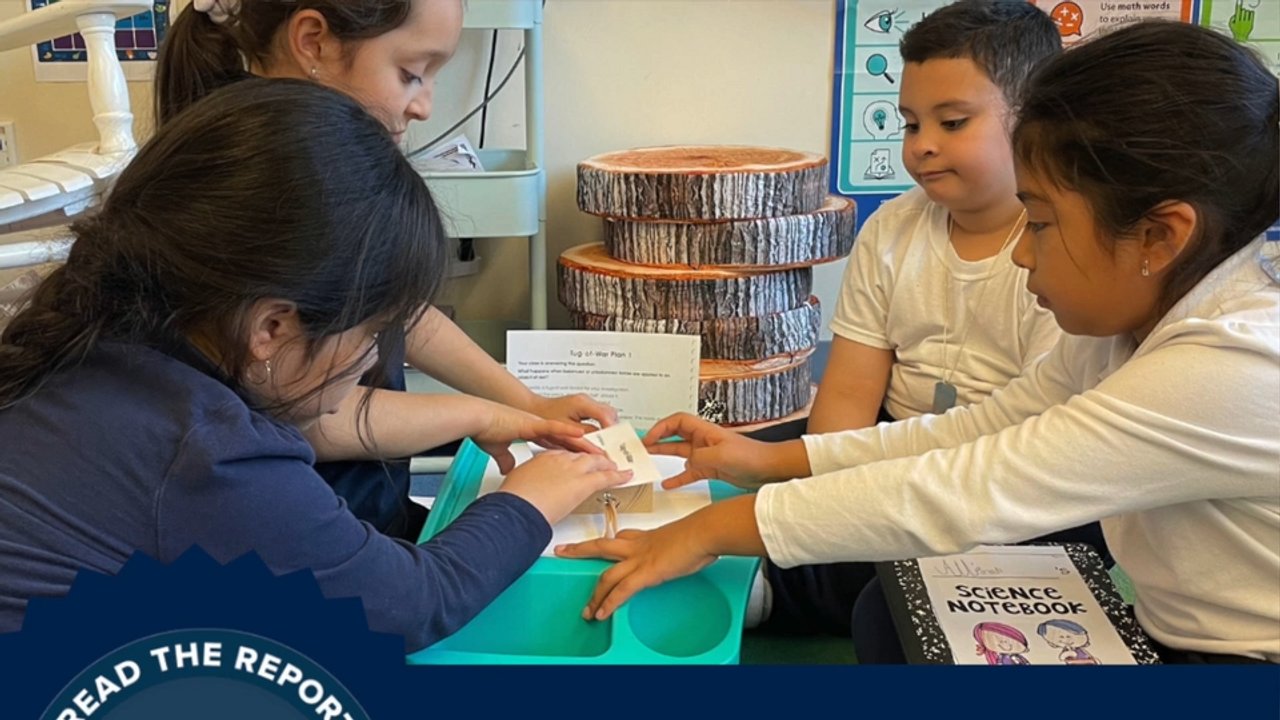
Physical and digital learning models both have their merits. A study from the University of Chicago found that when students engage with science concepts through hands-on activities, they deepen their understanding of the material. A report from Stanford Center for Opportunity Policy in Education (SCOPE) states that digital and interactive content— including videos, simulations and interactive maps, among others—give science students opportunity to explore concepts through multiple lenses.
Tackling the Issues of the Science Classroom
Creating opportunities for phenomenon- and problem-based, real-world science learning can be challenging for teachers. Among the biggest obstacles are:
- Competing priorities: Not having enough time to teach science, given the focus on math and literacy.
- New standards: Uncertainty and lack of confidence around teaching to new standards.
- Scarce resources: Teachers’ concerns over having to source their own materials for hands-on science.
Science, Reading and Math Scores Increase
The Smithsonian Science Education Center and the University of Memphis recently completed a five-year validation study–called the LASER i3 Research Study (Leadership and Assistance for Science Education Reform) — with 60,000 students in elementary and middle schools in 16 districts in three states across the country. A randomly assigned subset of schools in the study used the Smithsonian’s STC Program (Science and Technology Concepts™), an experiential, inquiry-based science curriculum.
'Stuff' Still Rules
“Stuff” in the Context of the Real World

How the Smithsonian Science Education Center Supports Phenomena-Based and Problem-Based Learning
Email: curriculum@carolina.com
Call: 800.334.5551