
Finding Balance in Middle School Science
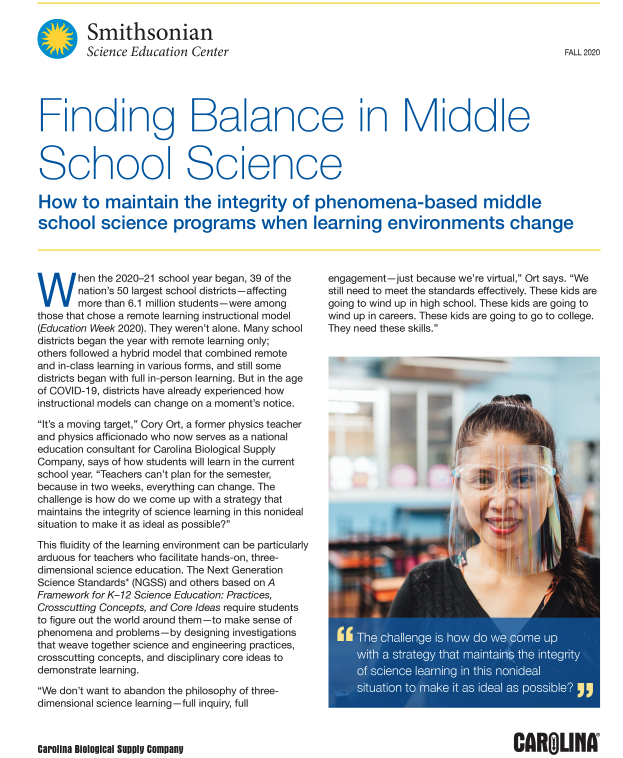
How to maintain the integrity of phenomena-based middle school science programs when learning environments change. Download PDF When the 2020–21 school year began, 39 of the nation’s 50 largest school districts—affecting more than 6.1 million students—were among those that chose a remote learning instructional model (Education Week 2020). They weren’t alone. Many school districts began […]
What Middle School Assessment Should Look Like
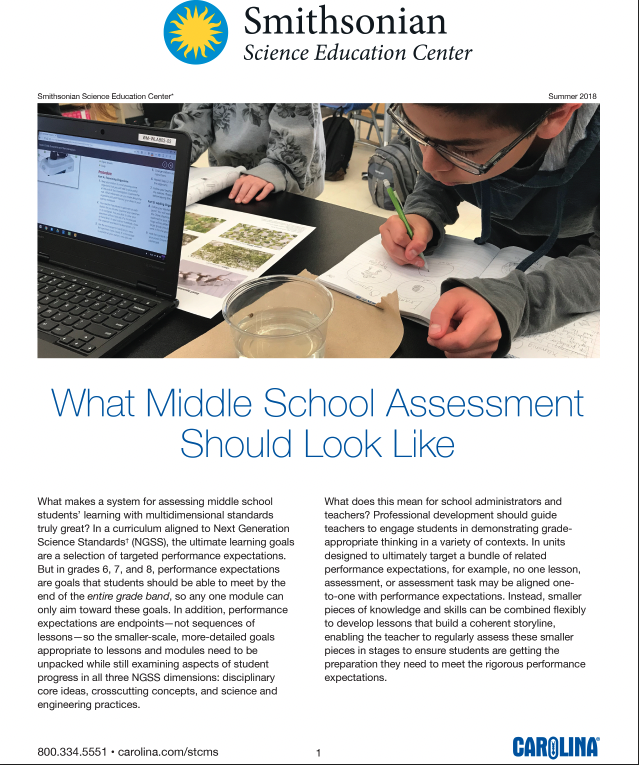
Learn how a great middle school assessment system can positively impact students’ learning of the multidimensional standards of the NGSS. Download PDF What makes a system for assessing middle school students’ learning with multidimensional standards truly great? In a curriculum aligned to Next Generation Science Standards† (NGSS), the ultimate learning goals are a selection of […]
High Touch to High Tech: Computational Thinking in 3-D Science
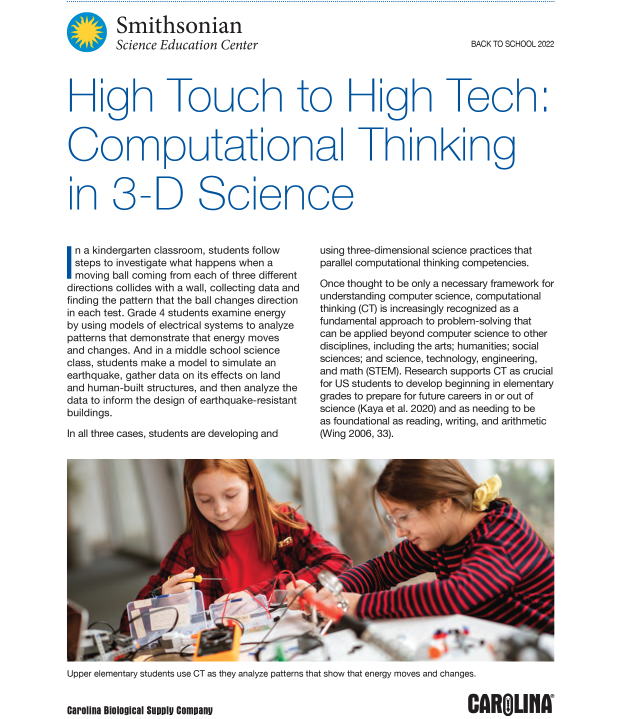
Download PDF In a kindergarten classroom, students follow steps to investigate what happens when a moving ball coming from each of three different directions collides with a wall, collecting data and finding the pattern that the ball changes direction in each test. Grade 4 students examine energy by using models of electrical systems to analyze […]
Read Like a Scientist | Whitepaper
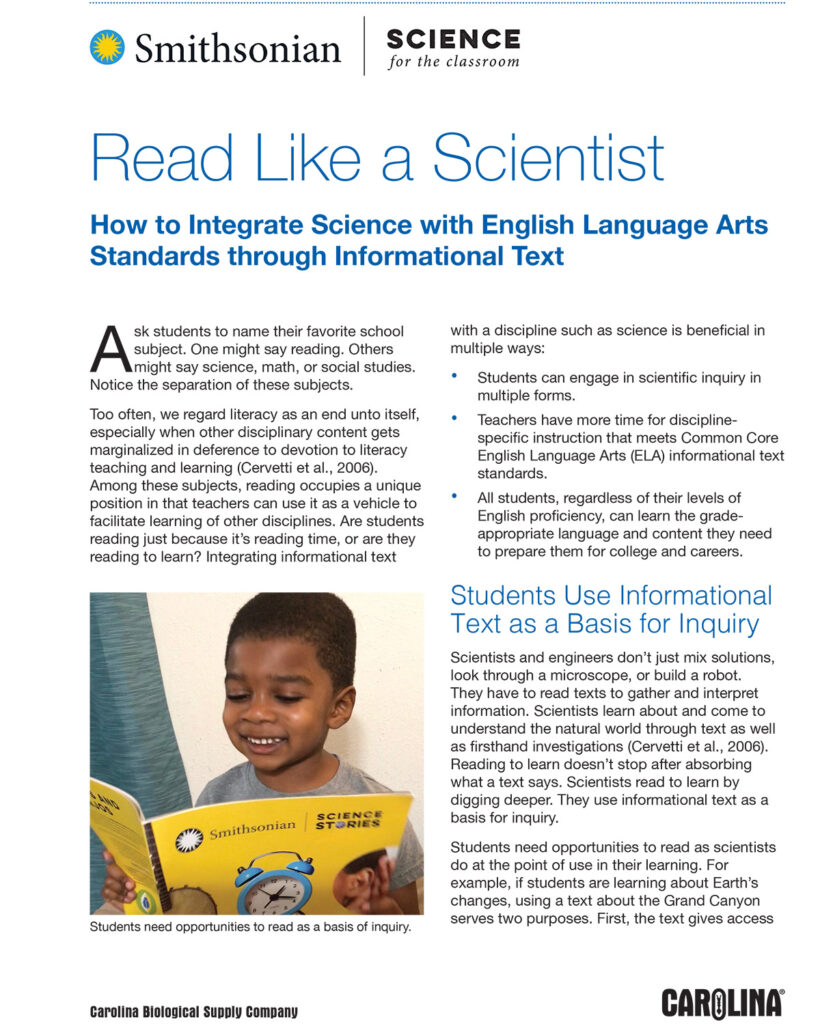
Teaching science provides an opportunity to meet English Language Arts (ELA) standards and improve reading skills. When you tie language and literacy instruction to science, your students develop disciplinary core understanding while following their curiosity about phenomena. Download PDF Ask students to name their favorite school subject. One might say reading. Others might say science, […]
Games and Simulations in the Classroom | Whitepaper
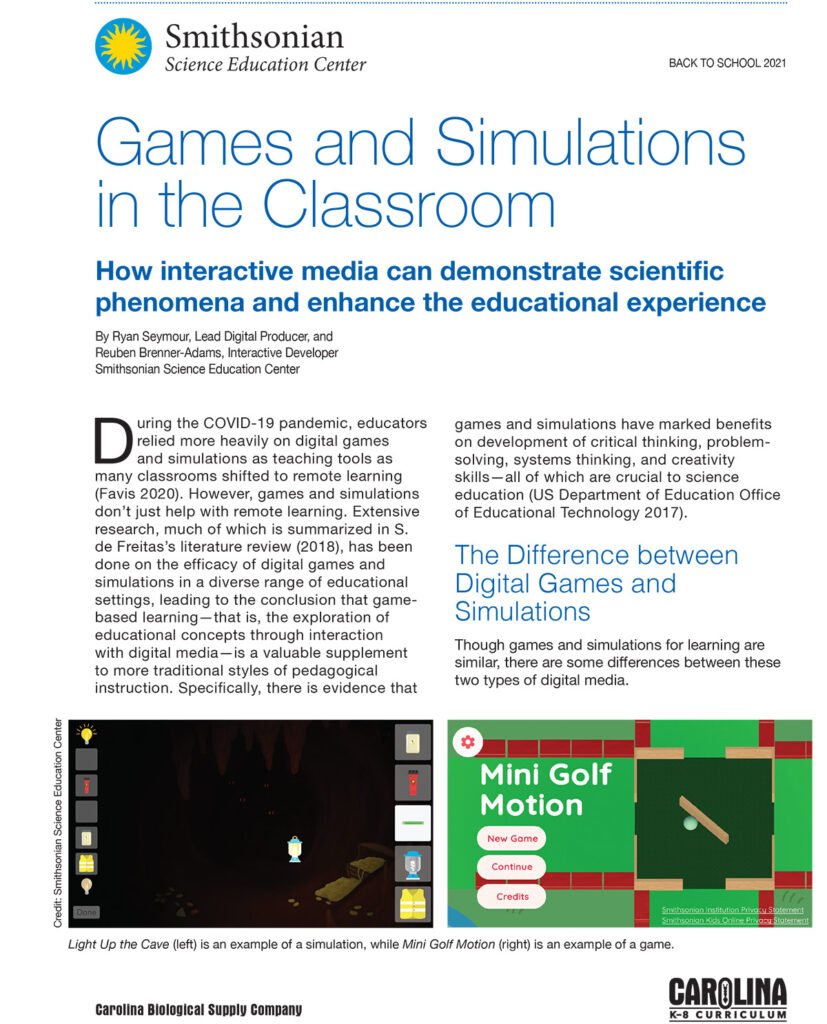
How interactive media can demonstrate scientific phenomena and enhance the educational experience Download PDF By Ryan Seymour, Lead Digital Producer, andReuben Brenner-Adams, Interactive DeveloperSmithsonian Science Education Center During the COVID-19 pandemic, educators relied more heavily on digital games and simulations as teaching tools as many classrooms shifted to remote learning (Favis 2020). However, games and […]
Thinking Like an Engineer | Whitepaper
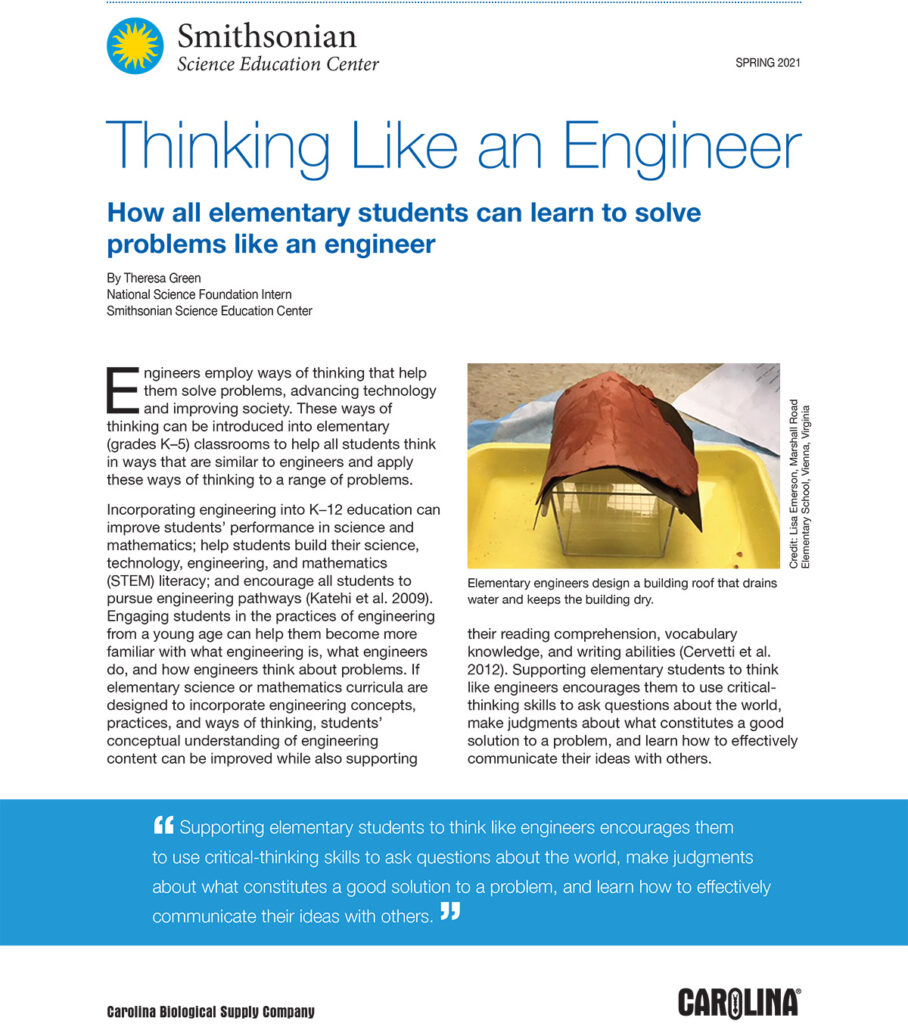
How all elementary students can learn to solve problems like an engineer Download PDF By Theresa GreenNational Science Foundation InternSmithsonian Science Education Center Engineers employ ways of thinking that help them solve problems, advancing technology and improving society. These ways of thinking can be introduced into elementary (grades K–5) classrooms to help all students think […]
Making Sense of Student Sensemaking | Whitepaper
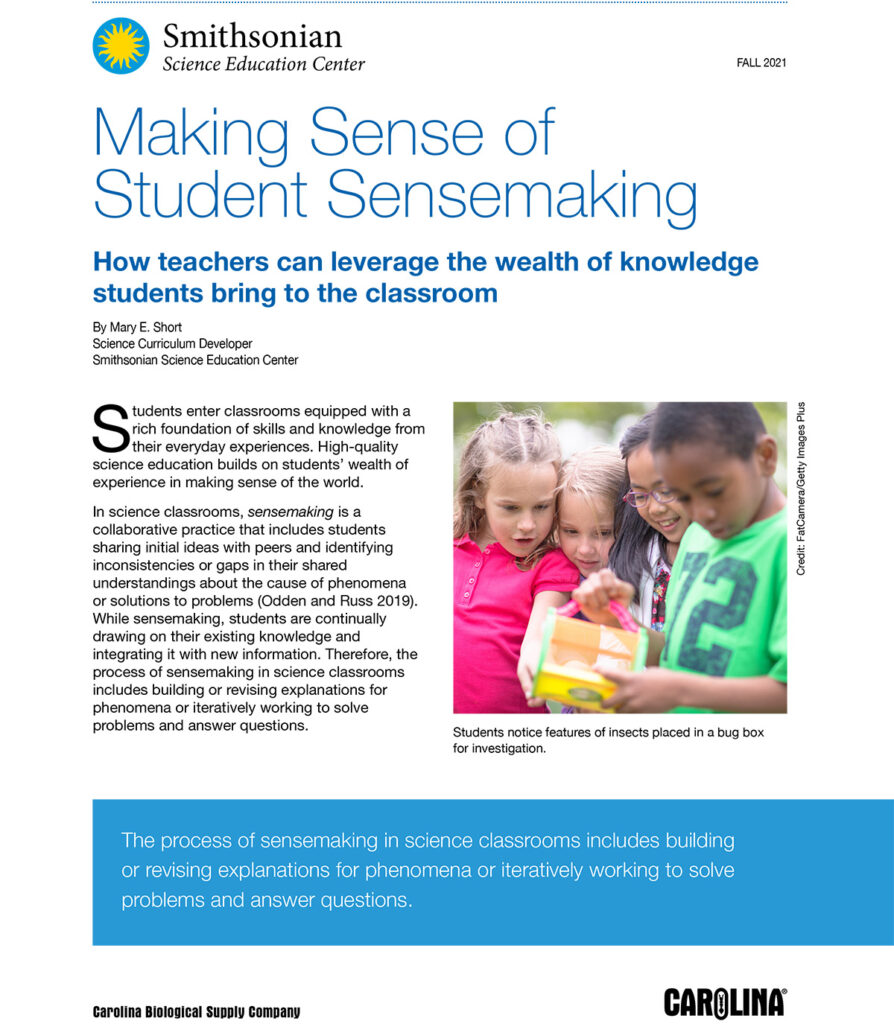
How teachers can leverage the wealth of knowledge students bring to the classroom Download PDF By Mary E. ShortScience Curriculum DeveloperSmithsonian Science Education Center Students enter classrooms equipped with a rich foundation of skills and knowledge from their everyday experiences. High-quality science education builds on students’ wealth of experience in making sense of the world. […]
3D Science Assessment in K–5 Classrooms | Whitepaper
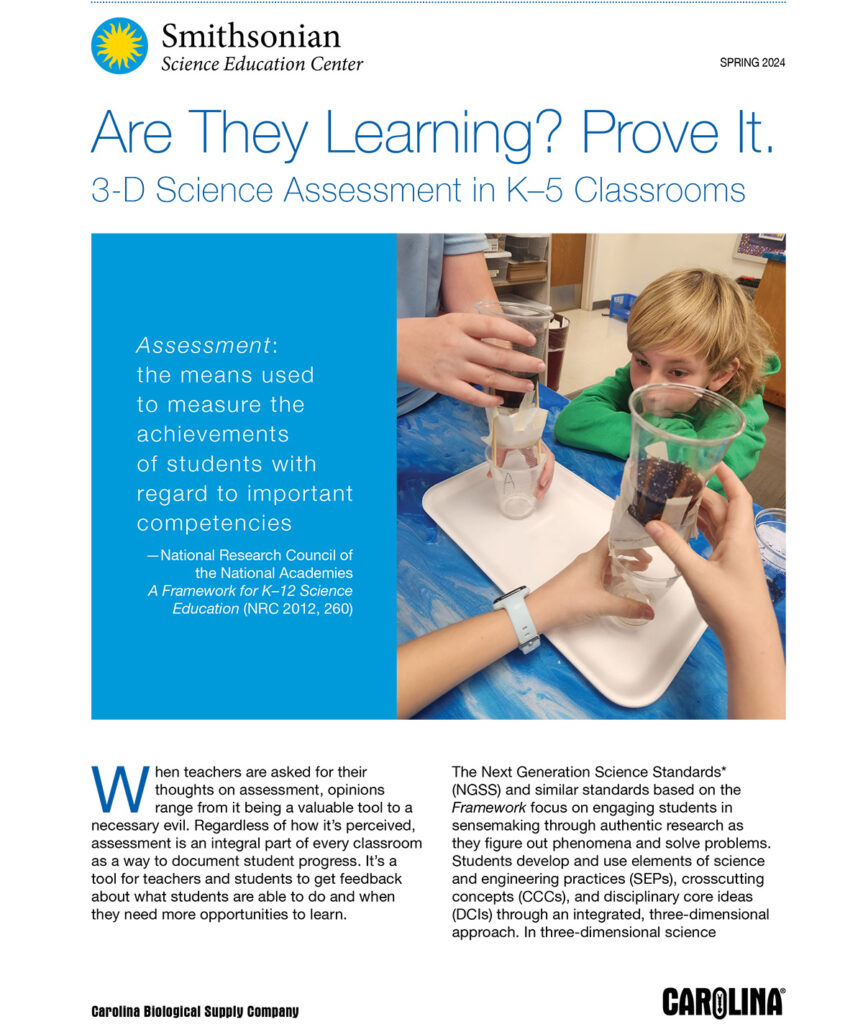
3-D Science Assessment in K–5 Classrooms Download PDF Assessment: the means used to measure the achievements of students with regard to important competencies—National Research Council of the National Academies A Framework for K–12 Science Education (NRC 2012, 260) When teachers are asked for their thoughts on assessment, opinions range from it being a valuable tool […]